Thursday, 7 April 2011

Storyboards and Shot List

Photobucket
Photobucket
Photobucket


Having storyboards and a shit list is essential when creating a media product within a group as it brings together everyone's thoughts and ideas about the product. With the collaboration of ideas, we are all able to work on each others ideas so we can create a product which has ideas from everyone. This makes the product successful as it has been a team effort.

Tuesday, 15 March 2011

Magazine Covers


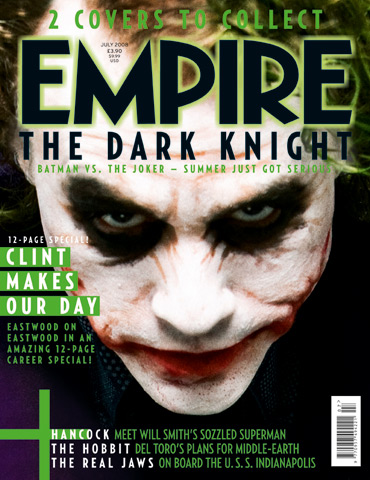
These are exsiting film magazines which are similar to which I would like to create. All of these film magazines have images of the main characters of the film it is advertising. I would like to have a close up image of my main 'monster' but use a different image than the one I will use for my poster. We can kind of tell the genre of the film due to the text on the side and the image itself. The 'Hellboy' and 'Avatar' magazine covers have overlapping images whereas the other two have images that are underneath the titles. I think that the magazine promoting 'The Dark Knight' has an image underneath the title because I the picture is so big, if the image were to overlap the title, the title would not be visible. I would like an image for my magazine which overlaps the title because I think that it gives the magazine a professional-look. Empire magazine and Total Film magazine are mainstream magazines however Sight and Sound is a niche magazine. Sight and Sound also contains music.

My Horror Poster

Thursday, 9 December 2010

Film Distributors' and Marketing

The way film are distributed and marketed is very important to films and how many people go to see it. If the film is distributed and marketed very well, for example, attractive production values, the film will sell and many people will go to see it.
The main task of the distributors is to identify and deliver their film to as bigger audience as possible. This is not an easy task as there are many other entertainment options available for people to do. Distribution is a very hard task to complete as many films are being released each year which, if successful, can make a lot of money. That's why it has to be very professional.

Films don't just make money from selling them at the cinema. There are a lot of people that prefer not to go to the cinema and have home entertainment instead. This includes DVD, Blu-ray, On-demand rental and free-to-view films every year. So if these options are available, some people choose not to go to the cinema. This is why distribution is vital because the film-makers make the most money out of cinema sales. A whole team of people are needed to distribute and sell a film. The more teamwork there is within a film production, the more successful the film should be.

UK distributors obtain the films they release in different ways:
  • Third-party sales agent
  • New content from a parent studio
  • Studio or production company that have made a deal with the distributor
  • A single title acquired before, during or after production
The best way distributors can sell their movie is to look for something fresh, something original, something that will attract a massive audience.

Distributors have to sign a formal agreement contract with the producer, sales agent or studio specifying the rights they hold in respect of the title. This includes the right to release it in the UK cinemas and promote it in all media before and during it's release. The contract will also set out where the income from the release will go and set out a date on which the distribution license expires.

Tuesday, 23 November 2010

My First Ideas For a Horror Story.


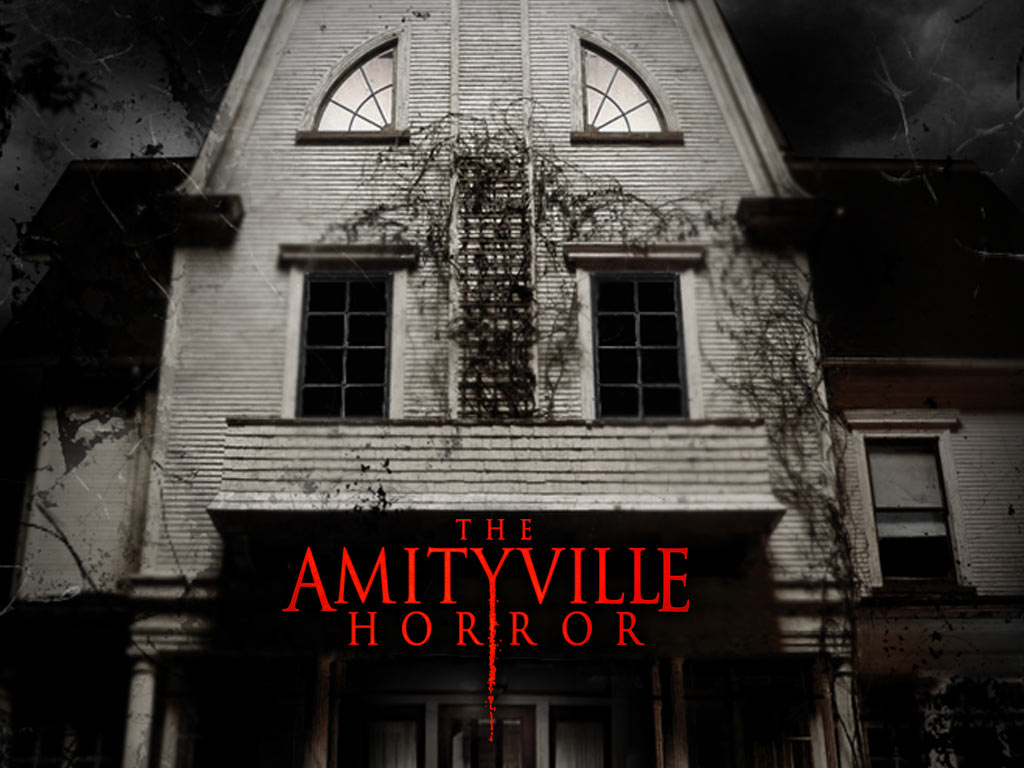
My first ideas came from an "Amityville" horror-eske movie with some concepts from "The Strangers".
" I first thought about a family who who owned this particualr house for generations. To create a background history/horror, all people that were living in the house, died of unknown causes. There was also no evidence that they commited suicide or murderd. I thought this create a decent background story for a horror. A few years after the incident, the house goes up for a sale and a new family move in. They have no knowledge of the previous owners and what happened. They live in the house for several months and everything is fine. They go to work, go to school, come home, eat etc. Everything is normal until one day the mother of the household finds a cuddly toy laying in the middle of the main living room. She has never seen it before. She picks it up, moves it and ignores it. The mother goes to work, comes home and finds the toy in the exact same place as she did when she left. No one has been in the house. She moves the toy again, and ignores it.
When everyone is home, everything is fine and normal.p They all go to bed as normal but the mother hears quiet knocking noises on the back door. She doesn't know if she is imagining or not. She asks her husband to see if he hears it. He cannot. The mother asks him to go downstairs to find out what it might be. The mother stays up stairs to wait for his return. He never returns."
These are my first ideas of a horror story but when I have to make a horror trailer, I don't think this could be very possible as I would have to find a couple of families and a free house.

Monday, 22 November 2010

Mood Board and Audience Research

Mood Board

This is my mood board where I have placed all of my ideas on a visual so I can show the other people in my group what sorts of ideas that I have. I have used some ideas that I may or may not use but overall, I think that I can show my main thoughts in this mood board.


Audience Research Questions

These are some questions I would like to questionnaire people about what sort of horror movies they like, what sort of content within a horror movie they prefer and how many horror movies do people watch a year.

1. Do you like horror movies?

2. What type of horror movies do you like?

3. What are your favourite horror movies?

4. Which aspects do you like within horror movies?

5. What horror settings do you prefer?

6. How often do you watch horror films?

7. Who are your favourite horror directors?

8. Why do you watch horror films?


Questionnaire Results


Photobucket


Photobucket


Photobucket

Photobucket

Photobucket


As me, Bill and Robb are within the same group, we have the same group of results.

These results are based on the 42 people that answered.

Tuesday, 16 November 2010

Differences Between a Teaser Trailer and an Official Full Length Trailer.

Teaser Trailer

A teaser trailer is a trailer that lets the audience know what the film is about but doesn't give hints at the full plot like a trailer does. A teaser trailer is a trailer that gives possibly stills and short clips of footage to make the audience want to see the next trailer. I think a good example of this is the trailers of Toy Story 3.
Here is the Toy Story 3 teaser trailer:


Full Offcial Trailers

Full trailers show the audience many clips of the film. They include lots of intertitles which are broken up sentences to keep the viewers attention. The clips that are shown are a mixture of main parts of the film and parts of the film which are significant. These clips have to be brief as the trailer shouldn't give away too much of the film and it's plot.
Here is the full trailer to Toy Story 3:


Tuesday, 9 November 2010

How the 'Horror Genre' represents gender.


The Horror Genre of film has interesting features when it comes to thinking about gender and how it is represented. Sterotypically we see male characters as strong and protective and female characters as weak and vunerable. Within the horror genre. female characters are pursued in a different way than how we see them sterotypically.
I will be looking at visibility, roles (domestic, familial, sexual and consumer), the male gaze and narrative within a horror movie.


In the film Halloween (1978), the ratio between male and female characters is fairly even. This is based upon speaking roles within the film. This does not include a few seconds in shot. There is one expection to this rule within this film though. Mike Myers does not have a speaking role within the film but is the main cause of the death within the film so the rule is broken in his case. So the visibility within this film between males and females is even. The main roles within this film are domestic, sexual and familial. The consumer role does not appear in this film as much as the other three. The consumer role is hinted at where Laurie is talking on the phone about what to wear. The main character, Laurie is domesticated within the film as she is seen cooking, cleaning and baby sitting. According to Carol Clover, if people have sex within in a film, they will most probably die. This comes to my next point of sexual relationships within Halloween. Annie and Lynda are portrayed sexually as they both talk about having sex and Annie getting changed in front of Mike Myers. This point also links with "The Male Gaze". We also see Judith Myers die at the beginning and we see that is seen sexually as she is only wearing underwear. Both Annie and Lynda die within the film and Laurie is the final girl that survives. The Familial role is also featured in this film between Annie and her Dad (who is the Sheriff) and Judith Myers is sister to Mike Myers. There are a couple of points to mention for The Male Gaze within Halloween. At the beginning we witness Judith's death. This is part of the gaze as she is hardly clothed. Lynda is objectified within Halloween as we see in the bed scene of the movie. Annie is also objectified in the laundry scene. These points are for The Male Gaze however Laurie is identified with. Her name could be a male or female name, her clothes are very neutral and does not wear clothes specific for a woman. She also doesn't wear any make-up and has short hair like a male character would. This challenges The Male Gaze as Laurie is not objectified.
The ratio between female and male deaths within the film is about 3:2. There are 3 female deaths and 2 male deaths. So, therefore the death toll is pretty equal. There is more importance attached to the female deaths because the girls that are sexualised are the female characters that die. Laurie, who is not sexualised, survives. From this, the "Reactionary sexual agenda" could be considered. So within this film, the horror genre represents gender by killing off the girls who are sexualised and saving the girl who does not.

Photobucket


The Shining (1982) is another film where horror represents gender in a similar way to Halloween. Within The Shining two thirds of the characters are male so therefore the visibility of male and female characters does not work as most of the characters are male. The Shining consists of domestic, familial and sexual roles and does not include the consumer role. I would say that this film has a general role too. Wendy is the main female character within The Shining as she seems to be a housewife. Dick Halloran shows her around the kitchen area as she will be in charge of the cooking. She also appears to be quite a frail woman so this gives away that she does cleaning and looks after Danny. The secretary at the beginning of the film also brings coffee into the room. This role does not have much importance but it still shows that woman are domesticated in The Shining. The familial roles within The Shining are that Wendy is a wife and a mum. She is wife to Jack but a Mum to Danny. I think that Wendy is the main familiar part within The Shining as she brings the whole family together. We also see Grady's daughters within Danny's flashbacks and Grady's wife. The only sexual role in The Shining is the bathroom scene with Jack and the lady in the bath. We see a woman in the bath and Jack staring lustfully at her. She gets out of the bath and stands looking at Jack. This is sexual as she is completely naked. The more general role within The Shining is that Wendy is very submissive but seems to do all the Hotel Maintenence. The one male gaze within The Shining is the sexual role within the film. As we see Jack looking at the woman in the bath, we are put into Jack's eyes who is sexually aparasing the nude woman as an object however, the woman turns into an old corpse thus exposing the objectification process of the woman and this makes the male viewer ashamed of their leer. We also identify ourselves with Wendy, the final girl. There are 4 deaths within The Shining. The ratio between female deaths and male deaths are about 2:2. The female deaths are the twins and Grady's wife and the male deaths are Dick Halloran and Jack. This does not work as there is much more males and than females within the film but more females die. The Shining represents Wendy as domesticated but Jack as sexual. Jack dies and the final girl, Wendy, survives. This relates back to what Carol Clover had to say about stupid, sexual characters.


Photobucket


Another film that I have studied is Eden Lake which was released in 2008. Comparing the visibility to men and women in Eden Lake, we see that there is fewer than half as many women as men. Eden Lake is another film that does not feature the consumer role for women but features the other 3 roles. At the beginning of Eden Lake, we see Jenny as a nursery school teacher. This shows that her job is caring and that she needs to give lots of attention to the children. We do not see what Steve does for a living. We also see another domestic role within Eden Lake which is the lady who speaks to Jenny and Steve in the small cafe. She appears to be a waitress who takes orders and serves food within the cafe. Another role that could be domesticated is the role of Paige. She is very passive within the gang where she does not take part in what Brett tells the other gang members to do, but only takes video. Though outside the gang, she is very aggressive towards outsiders. A small sexual role within Eden Lake is that when Jenny is objectified when they are relaxing by the lake and the gang are looking at her. As this film is based on broken families, there is an obvious familial role within Eden Lake. Brett is signified as a monster and he is made into a monster due to having no mother and having a violent father. The woman in the cafe also has a familial role as she defends the fact that the gang are her kids when Steve and Jenny talk to her about them. We also see Steve try to propose to Jenny throughout the film however, there is always a distraction which stops him. Eventually Jenny finds the ring when Steve is injured and becomes Steve's fiance. Related to the sexual role within this film, the male gaze from the gang members is complicated due to the fact that they are 'bad' and Jenny is clearly uncomfortable with it. Despite this, we have identification with Jenny throughout the film. Considering that there is more males within this film than females, half of the males die and 2 out of the 3 women in the film die. This does not make a 'reactionary sexual agenda'. The final girl usually survives however in Eden Lake, the final girl does not survive (so we assume). This does not make her victorious.

Overall, the horror genre represents gender in different ways. All of the films that I have studied, there are more males within the films than there are females however there are more female deaths within horror than there are male deaths. Females are also objectified within horror rather than men because of 'The Male Gaze'. The female gender is also split into 4 categories. The Domestic, Sexual, Familial and Consumer roles which all females fit into within horror films. Females are very much targeted within horror because of their vulnerable stereotype but they turn out to be the strongest gender.

Monday, 8 November 2010

Analysis of 3 Horror Movie Trailers - Trailer Conventions and Horror Conventions

Paranormal Activity 2

Paranormal Activity 2 is a sequel of Paranormal Activity. The film is set before the events of Paranormal Activity which lead up to the plot of the first film. The first film had a budget of only $15,000 and made over $100m. The second film had a budget of $1m. Paranormal Activity 2 has many more camera angles and shots than the first movie. There are many techniques used within the trailer which have inspired me for when I make my own horror trailer.

Trailer Conventions

Paranormal Activity 2 trailer starts off with the ending of the first film. This suggests that the second film is a direct sequel to the first however it does not mention if it takes place before or after the first film. We can tell that this movie is a horror movie due the video footage of an audience screaming and jumping at the film. The colour scheme of the film is very dark and the audio is very limited. For example, there is no music and only sound effects throughout the trailer. Considering that there is no speech within the trailer, this also shows that this is a horror movie. With most horror movies, the title of the film is not shown to the end. This keeps the audience in suspense to see what the movie is actually called. If we do not find out what the movie is called, the audience will not know what film they are looking for when they go to see it. The main production values of Paranormal Activity 2 are the special effects used within the film to create scenes which makes the audience jump out of their skins. Simple effects have been used, but they obviously proved to be very effective.


Horror Conventions

The Paranormal Activity 2 trailer is set within a family home in America. When we visualise a family we home we expect everything to be positive and happy. So we expect anything but paranormal activity.
There are two main camerawork features within Paranormal Activity 2 trailer. Handheld camerawork with the main characters and CCTV footage.
We see a couple of characters within the Paranormal Activity 2 trailer. We see a girl, a baby and possibly a mum. We hear the voice of a man who could be the dad in charge of the camera.


The Last House On The Left - 2009 (remake)


This trailer is an advertisement for the remake of 1972 film The Last House On The Left. Several trailer based conventions are used in order to effectively advertise it to a target audience.

The name of the movie is shown toward the end of the film but is said at the beginning of the trailer; the location is used as the title to emphasise the isolated location of the setting. Production values are shown throughout the trailer in the form of visual and inter-titled references. The notion of a remake holds its own set of values, previous fanatics will be intrigued as to the justice the modern version pays to the original. Closely linked to this is the inter-titled reference of famous horror director Wes Craven; Craven also wrote and directed the original.


A combination diegetic and non-diegetic dialogue is used, often appearing as a voice over, it is used to introduce the characters and depict the location, however, the inter-text titles outline the story in more detail, e.g.: when it says "It was a place to hide" and "It was the wrong house". Again the prevalence of the house is emphasised throughout and implies that an ideal home base of family is broken down. The titles are shown to be interspersed with various clips of the film.

Music is introduced to the trailer mid-way through the trailer and creates a point of contrast and confusion. An up-beat melodic cover version of Guns n Roses' "Sweet Child of Mine" is played over the montage of horrific and savage clips. A contrast is shown between the softness of the music and the harsh imagery; there are connotations between the easily recognised song and the subject matter. The parents of the raped and tortured girl are shown to be taking revenge on her attackers and the reference to the song is clearly intertextual, "Sweet Child Of Mine" and is representation for the love of their daughter. This depiction plays on the idea of the victims becoming the monster in order to defeat the monsters, but is justified by the music type.


The advert clarifies the horror genre by using a vast array of technical codes.

The entire film appears to be shot using a handheld camera and emphasises the lack of safety and security within the subject matter. Initially, there is little shake and the camera appears to be held fairly steadily. But still, it is obvious something will go wrong. As the structure of the advert develops the shaking increases to coincide harmoniously with the events taking place.

Editing is used effectively in this film in cohesion with Todorovs narrative theory. The beginning shows a series of steady shots with a fairly long cuts and illustrates the equilibrium in the story. As the story unfolds the series of disruption, disequilibrium and resolutions are used with short fast cuts to show snippets of the horrendous imagery. This both creates suspense, action and entices the target audience with the most horrific scenes of the film - acting on the perverse intrigue of the horror fanatics. A new equilibrium is shown with a final long cut as the revenge-crazy parent appears to have defeated the attackers of his child. The image show left shows the new equilibrium depicted in the advert. The attacker is detained but it is clear there is more sinister activity about to take place, the advert finishes in suspense, what happens to the detained man is unknown, this entices the audience to find out how the plot develops.


The most iconic aspect of this trailer, to me, is the use of contrasting music. I feel that the soft and melodic tune juxtaposes the subject matter in a way that creates an immediate unease. An unease in the mismatch of audio and video, but also in that the song represents and justifies the actions of the parents in the advert and ultimately makes the viewer question themselves.


The Blair Witch Project(1999)


Trailer Conventions

-The genre of the movie is established primarily through lighting and sound. A monochrome colour scheme is used throughout the trailer accomapnied by jerky camera movements and low key lighting. The sound consists of screaming, both male and female, and very deep, slow accompanying music that builds with the screams and suddenly fades at the end. There is little audiable dialogue at all. The sounds consist only of screaming.
-The name of the movie is given at the end of the trailer, at the point in which the audience is at their peak interest in the trailer, enabling them to keep focused on what this film is.
-The production values only consist of review snippets from three well-known magazines. "Genuinely frightening", "One of the creepiest films since The Exorcist" and "Scary as hell", which reenforces the genre of the film.

Horror Conventions

- The camerawork is handheld and places us in the action, which enables us to identify with the characters much more, and become more intrigued in the action. The images are sometimes focused on somebody, or shaky, jittery movements, but all of these are unsettling movements and frames.
- We are informed very little about the film. We only see people's reviews, screaming, and the title of the film. This keeps the audience interested and wondering more about the film.
- Visual signifiers of genre are apparent. We see somebody upset, somebody running through a forest and complete darkness, as well as shaky cameras, all of which are in monochrome to create a darker, lonelier feel to the movie.


I worked with Billy Lytton and Robert Brown who helped with each trailer.

Wednesday, 13 October 2010

Narrative Theories related to The Shining.


Vladamir Propp, Tzvetan Todorov, Claude Levi-Strauss and Bordwell + Thompson all have interesting theories on narrative structure. I think that Levi-Strauss has the most interesting theory as he has a different idea to the other theorists. As the others try to explain the structure and complexity of the narrative, Levi-Strauss thinks of the binary oppositions that are featured in a narrative.


Vladamir Propp


Propp was a Russian critic who examined 100s of examples of folk tales. His idea of narrative structure was the characters that were involved in the narrative. There were 8 characters rolesand 31 narrative functions. The 8 characters were;

1. The villian(s)
2. The hero
3. The donor - who provides an object with some magic property
4. The helper who aids the hero
5. The princess - the reward for the hero
6. The princesses father (doesn't appear in The Shining)
7. The dispather - the person who sends the hero on their quest
8. The false hero - pretends to be the hero


In The Shining, we can relate these to all characters but the villian is uncertain. If the villian is Jack, the dispatcher is Delbert Grady. If the villian is the hotel, the dispatcher is changed to the hotel manager. The Hero in The Shining is either Danny, Wendy or both of them. I think that Danny is the hero as he is able to lose his father in the maze. Danny also has The Shining ability. Halloran tells Danny about The Shining. This makes Halloran the donor.


Propp also outline 31 main functions of a narrative. These functions have 6 sub-functions:

1. Preperation
2. Complication
3. Tranference
4. Struggle
5. Return
6. Recognition


In The Shining, preeration, complication, transference and struggle all work. The return and recognition does not work as we don't see where Danny and Wendy go. All we know is that they escape. We are not told how long it took them to get back or if they got back safely. The 31 functions of a narrative tend to happen in chronological order. However, in The Shining some of the points are not in order. For example, number 11. 'The hero leaves home'. In The Shining, Danny leaves home at the beginning of the film. Number 8 states 'The villian harms a member of the family'. This happens after the hero leaves home. The point still works, but the order of which the functions are set out does not work.

Tzvetan Todorov


Todorov was a Bulgarian structuralist linguist who had a simple and basic idea about narrative. He believed that stories started with an equilibrium, a normality then hit with an enigma which disorientates the story and then it takes a pathway to resolution. This then ends with a closure in a funeral (sad ending) or wedding (happy ending).


This kind of works with The Shining where Jack gets a new job and they travel to the hotel for the winter. This seems completely normal. When Jack starts to deteriorate, this is the enigma of the story. There a pathway to resolution where Danny and Wendy try to get away from him. Another small enigma happens when Jack is chasing Danny in the maze but ends in a wedding closure as Danny is reunited with his Mother.


Claude Levi-Strauss


Claude Levi-Strauss was a French anthropologist who studied the meaning of binary oppositions.


Levi-Strauss looked at narrative theory in a different way to the other theorists. He looked at the binary oppositions within a narrative. Binary oppositions are values that reveal the structure of media texts. The best example of a binary opposition would be, Good and Evil. We understand the concept of good being the opposite of evil. Levi-Strauss was not worried about the order in which the binary oppositions happen. He was interested in the binary oppositions that appear in different plots.

Some of the binary oppositions include:

Good/Evil
Earth/Space
Humans/Aliens
Past/Present
Normal/Strange
Known/Unknown
Villian/Hero
Male/Female
Pure/Corrupt
Inside/Outside


The usefullness of this theory is that it can be applied to any text or narrative. There are endless amounts of binary oppositions so there will always be at least one opposition in a text.


In The Shining there are several binary oppositions we can talk about. The obvious Good/Evil tends to work in most texts. We can apply this to The Shining by linking it to Jack. As the film progesses, Jack deteriorates, becomes evil and attempts to kill his family. We could almost say that Jack is a binary opposition of himself because at the beginning of the movie he seems like a good character.


I also think that the Known/Unknown is in The Shining as the ending reveals a picture of the staff that worked in the hotel in 1921. As it zooms closer and closer to the image we start to realise that the photo is of Jack. 60 years before 1980. This does not answer any questions for the audience. It just creates them. Therefore the ending of the film is unknown however, throughout the film we are given most answers to the things that have happened. For exmaple, Wendy becomes curious as to where Jack is and takes a look at all of his work. Up until this point we do not have an idea what Jack has been writing. This answers our question therefore is it an answered question.


The binary oppositions within this film could be endless. The binary oppostions to any film could be endless. This is the reason why Levi-Strauss has an interesting theory of narrative.


Bordwell + Thompson

Bordwell and Thompson's theory defined narrative as "a chain of events in a cause-effect relationship, occurring in time and space". Bordwell and Thompson did not create a full theory about narrative unlike Levi-Strauss and Todorov, they just came up with some interesting ideas about narrative. For them, a narrative typically begins with one situation and then a series of changes occur due to a pattern of cause and effect. This then results in a new situation which brings the end to the narrative. They believed that narrative material is due to space and time. Space and Time defines where a narrative takes place, when it takes place and how quickly the story happens. Narrative uses techniques such as flashbacks to manipulate our awareness of space and time. We can also use slow motion and speeding up to manipulate time and space.


In The Shining, Jack can be seen slowly turning insane. This is happening for a certain reason which chains together occurring in time and space. This is a very simple idea about narrative but it can work with many different ideas.

Overall

I think that all narrative theories help the understanding of movies because you understand the inner-workings of the movie and everything that is going on. If you can understand the characters, you can be more involved with the film. In some aspects, I think that it ruins the film because you might be thinking about too many things. I think that a film should be a film to watch and enjoy not to be used as an academic material.

Friday, 8 October 2010

The Return of the Repressed

The Return of the Repressed is a process explained by Sigmund Freud who theorises that when a thought or feeling constantly presses to gain access to the mind (unconciously when the thought or feeling is out of awareness). From here, the thought or feeling would be stored and then would constantly try to be put into action .The mind is on contsant prevention to stop the expression being shown but then the thought or emotion disguises itself and then it turns into a symptom. As humans we have a form of direct mind which we use to think. We also have an unconcious mind which holds emotions and feelings and lets them out unconciously. We do not think about being angry, happy or sad. It just happens. The Return of the Repressed is the idea that trapped thoughts or emotions let themselves out unconciously if we have not found a way to resolve this feeling. As an only child, the parents revolve their attention around the child constantly. When the parents are about to have another child and the child realises that the attention he recieved will be no more, the child immediately starts repressing feelings and emotions such as, excitement and anger. If the angry emotion stays, it will soon become unconscious and the child will have to accept the infant into his life and accepted that the newcomer is a sibling. Usually the child would show his love for the infant. This is the childs idea of gaining attention back from his parents but using the infant for it. Once the child realises that it is not working, violence can ensue even though the child still loves the infant. Finally, the child realises that this does not work either and comes to understand that love for the sibling is more appropriate than anything else. The repressed and unconcious emotion has been destroyed.

This idea can be added to the feelings and thoughts we recieve when we watch horror movies.


I didn't have much of a clue as to what sort of "media" I could have used for this blog post. So instead, I exploited it by using a small sketch from Cyanide and Happiness.

Existing Horror Posters

The Stangers Poster - This poster is unique because it has a shot from the trailer. It also has a wide field of view. Even though this is a horror movie where close ups are very effective, this poster works very well because it breaches the main rules of a horror poster.


The Ring Poster - This is a poster which is effective that doesn't have much on it. The Ring in the middle of the poster is the main 'monster' within the film but if you haven't seen it, you wouldn't know otherwise. I like how this poster is effective because it is mysterious for people who haven't seen the film and scary for people who have seen the film.


Scream Poster - This poster is also another typical poster which uses a close up however it does not use an image of the 'monster'. It uses the main character. The expression on the woman's face shows that she is scared. Her face is covering the whole poster to create a striking and appealing poster.

How did you use new media technologies in the construction and research, planning and evaluation stages?


Throughout the construction, research, planning and evaluation stages of my media product, I have used many new technologies which have helped me make this product a reality. The technologies include hardware, software and different websites. All this technology has helped me in different ways. For my research and planning, I used the internet to research about the history of the horror genre and how the horror genre is represented in exsisting horror trailers. I used the search engine Google and YouTube to do this. I used Google to find pages about the history of the horror genre and how it has changed over the years. I used the video sharing site, YouTube to search for horror trailers. To make this horror trailer come together, I had to learn how to use a few programs. These prgrams included Final Cut Pro, Garageband and Photoshop. Final Cut Pro and Garaband were completely new programs to me as I do not have any previous experience using them. I experimented with the programs to get a feel for each program so I was more confident when it came to editing the trailer. Final Cut Pro is a program which has a lot of features and effects which can be applied to videos and sound. As we had Garageband to edit the sound, we just used Final Cut Pro to edit the video. I learnt how to cut different clips, add fading effects, add text and how to make day clips look like they were shot at night time. All these skills helped me and my group create the trailer. Garageband was anopther program in none of us used. We all had less experience or even none so we had to improvise. Luckily, Garageband is a fairly easy program to use and we were able to cut tracks, distort them and make different sound effects. We also used royalty free music which we were able to put together to make our own soundtrack. Photoshop is a program which me and my group have been using last year and before that. Having these skills and experience we were able to create our posters and magazine covers with ease. Photoshop is a very diverse program where you can create something from anything. With Photoshop you can edit photos and make them look very surrealistic or beautiful. In this case, I chose to make my images look surrealistic and scary because that was the look I was going for. By adding different filters, changing the brightness and the contrast, cropping the imaage into different layers I was able to create a professional image with only a few simple steps. I also used a digital still camera and a mini DV camcorder which helped me get images for my poster and magazine and footage for our trailer. Digital cameras are good because they are easy to use and they produce good quality images. The file transfer is quick and easy too. In conjunction with SD card storage, hundreds and even thousands of images can be stored at once. A mini DV camcorders are good because they are very easy to use and record. They are also very light so they can used anywhere with no problems. The only problem with using DV tape is that getting the footage from the camera to a computer can be a long and tedious process. Once the footage is uploaded it can be edited and changed in any way. Within the process of making my media products, I have also used a variety of websites. I have used YouTube, Flickr, Blogger, SurveyMonkey and Royalty free music websites such as incompetech. YouTube is a video sharing and creating website which is easy to upload videos and embed them from there onto my Blog. There are millions of people who visit the website everyday so if they see our trailer they are able to leave feedback. However, because there are so many people who visit the website and there are thousands of videos uploaded every day, my trailer will not be viewed much. I also used YouTube to view other horror trailers and gain ideas for my horror trailer. All content which is uploaded to YouTube is analsyed for copyrighted content. If you are using a copyrighted song or if the artist and recording label is not credited, the video will be taken down and will need to be re-uploaded with an orginal soundtrack. Flickr is another helpful website which is used for photos. It can be used to create many albums which can show photographers work. I used Flickr to upload film posters and used the tag/note system where I can annotate and analyse it and then embed it onto my blog. I also did this for my own film poster and magazine. Intergration with Blogger can be quite difficult because when uploaded to Blogger, only the picture is shown, not the analysis. SurveyMonkey is a questionnaire website where you can make your own surveys to share with people and collect results/data. This is an affective way to collect data because it is easy to fill in the answers and it doesn't take too long. The answers can either be multiple choice or free answers. In conjunction with SurveyMonkey I used Facebook to share the questionnaire to my friends and family. This resulted in about 50 people answering it. With this data we were also able to used SurveyMonkey to make tables to data and embed them on our blog to show our results. Even though this is a good way of getting people to answer your questions, some people may not answer a certain question or they may give an innapropriate answer. This would affect the results if everyone did this. Blogger is a website run by Google which allows people to create a free blog to write and share anything. I have been using it to showcase all of my coursework and evaluation as it shows it neatly and effectively. There are also quick links which takes you directly to the piece of coursework you would like to see. I have used this site for a while now and I am very confident about using it however there have been times when I have forgotten how to do something for example move images or change the text. A disadvantage of using blogger is that it does not auto atically save what you have written. Sometimes I have published a post however before it posts I get a server error and then everything I just wrote is not there. When using Blogger, I have had to use different types of media to show that I have done appropriate research and planning etc. This media includes images, videos and music. Because I have the ability to use this medium, it is best to use it in appropriate ways. Compared to my other subjects like ICT and Photography, when evaluating work in them subjects it is much different to the way I have done it here. In Photography, I have to make visual comparisions to images or professional photographers and my own images. I simply only use a word processor to show these comparions. I do not use other related images or videos to show comparions. A lot of the work is in a sketchbook too where I cannot use Media such as music or video. I have also used Photoshop in Photography to edit images. In Media, I have used it to edit and create images. From using this program in both subjects, I have been able to become familiar with the program and where everything is. Using sites such as Flickr, makes analysis much easier because I can highlight certain areas of a image and add text and a tag or note. When completed, all i have to do is hover over a certain part of the images and an analysis of that part comes up. This is much easier than describing what I am analysing. I also used Royalty Free Music websites where I was able to listen to thousands of different pieces of music and download them then use them in Final Cut Pro or Garageband to make a soundtrack. These websites are good because the track can be previewed before download so you are not wasting time downloading and listening to the music, then if you don't like it, deleting it. Some of the music on these websites are very similar and the titles of each piece of music doesn't give away what the music is about. Incomeptech has a description of the song and what it contains however you still have to listen to hundreds before you get the one you like or want. If it wasn't for all of these new technologies, I don't think I would be able to create a good trailer with a professional magazine cover and film poster.

What have you learnt from your audience feedback?

Whilst creating our horror trailer, we tried to make it look as professional as possible. We were always thinking about the audience and what they would like instead of what we would like. Once we thought our trailer was good enough, we decided to add a good font and decided that our trailer was finished. For most horror movies, the main target audience is for young teenage males. We didn't just want our trailer to be aimed at young teenage males. There are many girls who are more willing to watch horror films nowadays so we made sure that we didn't directly aim our film just at teenage males but also at teenage females. To gather feedback for our trailer, everyone in our class had to show their trailer to the rest of class and after a viewing of their trailer, each person would say what they thought was good and what they thought they needed to improve. From our feedback, I learnt a few things...

This was our feedback:

What needs to be improved:

Music needs to speed up / be more pacey

When we were putting together the music for our trailer, we wanted the music to fit well with the trailer itself. I think that some people made this comment because there were quick handheld shots which didn't have fast enough music for that particular clip which ruined the climax of the trailer. We also tried to make our music slowly build up. I think we achieved this however I think that some parts needed to be faster. We changed this by adding in a few more drum tracks and more tense background music.

Overall trailer slow

When we went out filming to get footage for our trailer, we shot as much as we could so we were not short of clips when we got to the editing process. When we were editing the trailer, I think that we put too much footage in our trailer and the trailer ended up being 1min45. Most full length trailers are only 1min - 1min30. So we made our trailer a little shorter making the trailer feel much faster.

Lots of build up but not much happened

When we were editing and filming our trailer, we wanted something to happen at the end like a girl scream or something to make the audience jump. We never ended up doing this however we added a shot of us at the end walking towards the church where all the action of the trailer just happened. We wanted to create the tense effect of "I wouldn't do that if I were you". And the clip just faded out. The way we improved this will be mentioned in "Ditch long walking shot".

Too much cutting

Some people said we had too much cutting within our trailer however we thought that lots of action and cutting was a trailer convention, keeping the audience of the edge of their seats. When we came back to make improvements to our trailer we moved a few clips around to make the trailer flow a little better.

More Monk shots later

We had quite a few shots of the Monk because we didn't want our trailer to lack the main 'monster' of the film. We added quite a few shots of the Monk throughout the trailer to surprise the audience. Some people felt that we should have moved more shots of the Monk towards the end. We did this we weere rearranging the order of our trailer.

Quality of light / saturation change

Lots of our footage was taking during the day and a minority of it was taken at night. We knew we could take advantage of the "day to night" effect in Final Cut Pro so we were not worried about our overall effect. Some of the clips were we added "day to night" became too surreal and the colour was too bright and vibrant. We spent some time on editing our "day to night" clips so they looked as realistic as possible.

Ditch long walking shot

Many people said that we should have ditched the long walking shot at the end of our trailer because it dragged on for too long and it completely lost the audience. We had to re-think on what we had to do and we decided to move a few clips around. Because not much happened at the end of our trailer, we decided to put our strongest clip of the Monk at the end and we put the walking shot near the beginning of the trailer and made it much shorter. We didn't want to ditch the shot because we thought it was a good establishing shot showing where the characters were going.

Maybe have a voice over

One thing we thought about when we were planning our trailer was to have a voice over/dialouge throughout the trailer. During the filming process, we came to a decision that it was a good idea to keep the trailer free from dialouge as we thought it would have been cliché.

More intertitles about the Monk

When researching horror trailers we realised all trailers have intertitles to briefly explain the plot of the story. We did this by explaining how three friends ended up to come across this violent ghost Monk. We never actually said much about the Monk and how it ended up for him to come back to life. In the end, we never added any titles about the Monk because we wanted to keep the Monk in complete mystery as this would want the audience to see the film.

Slightly more dramatic

As we already got all our clips we wanted, we thought it would have been difficult to make our trailer more dramatic without shooting again. So to make our trailer more dramatic without shooting we edited our soundtrack as much as possible to give a more dramatic effect. As we moved around a lot of clips and the soundtrack didn't fit anymore, we had to edit anyway. We added more dramatic drums and more bellowing bass tones to make our trailer much more tense.


Good points:
Well edited
Music fits well with trailer
Running shots looked realistic
Camera angles of Monk were good
Locations were realistic

From this feedback I was able to realise the things that didn't work within our trailer. Without this feedback, we wouldn't have been able to see the different things that didn't work and the overall product wouldn't have been very good. The audience feedback made us change our trailer so it was much better. We mainly changed the order of our trailer because we realised our "walking shot" did not work at the end. We also improved the saturation in some of our "day to night" shots because some of them looked unrealistic. With these changes and a few minor improvements, I think that we made a better trailer just from audience feedback.

How effective is the combination of your main product and ancillary texts?

When film distributors want to market/advertise their movies, they produce a trailer and poster which effectively becomes the reputation and face of that movie until it is released. Trailers are short clips which tease and show what the film is about. They are designed to make people want to see what happens in the movie so they go to see it. A poster works with the trailer for example it refreshes someone's mind after they have watched the trailer. This way they do not forget about it. The same happens vice versa and the poster makes someone want to watch the trailer for the movie. With websites such as YouTube, it is becoming much easier to view trailers and it gives individuals the freedom to watch trailers whenever they like. There are three main parts of making a movie. Publicity, Advertising and Promotion. Each part has it's own say and improtance when it comes to making a movie. These things are what make people initially go and see a movie.


Distributors have to make a tailor-made production plan according to the studio/directors. The most important decision a distributor has to make is when to release a film and how to release it. Their main job is to get the target audience indulged into the movie and the excitement that follows. These techniques are done through marketing knowledge, statistical research, professional judgement and commericial experience. Throughout the filmmaking the distributor has to make sure the whole film is being based around it's core target audience. However, a lot of distributors hope that the film will 'break out' or 'cross over' between different audiences so they are able to make more money. Even though 15 - 25s visit the cinema at least once a month, creating a film is still a risky business.


The distributors consider what a film might earn. Once they have done this, they start to think about budget. They have to make sure to get it right because they cannot be sure they are going to make back the money they spend. As digital media is getting more and more popular, film distributors have to start thinking about other ways to promote or advertise their film. They need to find a decent source where many people visit daily. YouTube is an excellent site for advertising because it is a video sharing website. Millions of people access the site everyday to watch their favourite amatuer film makers. Buying an advertisment on the front page will definately increase the chances of people people knowing about the film. Also being a video sharing website, the advert can directly link to the trailer of the movie.


Another way film distributors rely on is 'Word of Mouth'. Word of Mouth is an extremely effective way of getting people to watch their movie however the content and ending must be good so people praise the movie to their friends. People are more likely to go see a movie if they recieved positive feedback from them. Distributors have to try and stop negative word of mouth as it is very hard to overcome. Their aim is to make the film good before it is released therefore many people will watch it initially. This is the only way to fight negative word of mouth. Publicity of a movie is also very important as it becomes yet another eye-opener like the poster or trailer.


Distributors and special agencies work with the media to arrange cast interviews. This gives out information to the public about the actors andthe things they had to do in the movie. Photographs taken from highly qualified photographers are shown with clips from the movie before, during and after production. A preview screening at some cinemas occurs when you go to watch one movie and before the movie you wanted to watch begins a pre-screening is shown. This is a small part or a special one-off shot of the movie in question which gives the audience no choice to watch. This promotes the content of the film and maybe a little cliffhanger to get the audience to remember that part so when they next come to the cinema, they want to see that particular movie. Merchandising is another part of a movies distribution which helps it sales. Each film has it's own soundtrack which can on it's own produce revenue.


Synergy with other companies to sell figures, soft toys, ringtones, games and books can all help the build up to a movie. These techniques are usually used with children's movies however the sight of a game or a soft toy to the older generation can still make them want to see that movie. It can saturate the streets and media so much that nearly everyone is exposed to it's existance.


I think that my poster and main product work well together because the main colours used in horror are red, black and white. On my poster, I have used all three of these colours to express the horror genre and in my trailer we used mainly black and whites. We didn't want to use red in our trailer because we thought that it may make the trailer look amateur. A lot of our footage in our trailer is around trees and church. I did not want to take a screenshot from the trailer and place it on my poster for two reasons. The quality of the screenshot wouldn't have been very good and professionals never use screenshots from a movie on a poster. For this, we went out for a seperate photo shoot and took some images for the poster. The image that I used for the poster is a close up of the monk. We cannot see all of his face but I think that this reflects the horror genre and the mystery of the movie.


Throughout our trailer, we had numerous shots of the monk but we never had any close ups of his face. I think that the poster is almost adding another medium towards the movie marketing. The facial expression of the monk is very bold and still. This shows that he has no emotion for anyone or anything. In our trailer, we used a distorted, old english font which gave the effect of an old Monk that has come back from the dead. I tried to cooperate this with the poster by using the same font for the title, date and tagline. I found that when I used that font for the title, it did not work because it looked amateur and not scary enough. So I found a scribble/eroded font which worked much better. I also turned it white which made it stand out from the other parts of the poster. Also on my poster is a billing block, certificate badge and website. On most modern film posters, they have all of these. I thought that by adding these it would make my poster look much more professional.


The Monk is featured in all my media products and presented in different ways. On my poster, a close up of the Monk is shown because it is more direct with the audience. The magazine shows a picture of a Monk within a forest. This is to make the magazine look good so the audience pick up the magazine and buy it. Within our trailer, the monk is hidden but effectively always there. By focusing the Monk as the main part of the film it shows that we have a lot to learn about the viscous attacks the Monk may do. I also think that the Monk is shown in a professional way in a all media products. In the poster, magazine and trailer there are no signs that the Monk is violent. The three friends summon the Monk from the dead but this is only seen in the trailer. This means that each media product gives a different story towards the film and what it is about.


Overall I think that all my media products work well together because they each tell a different story and they draw the audience in with different ways. It think that when the audience see the trailer on television or YouTube, the poster will remind them of the trailer and it will make them want to see the movie even more. And also, if they are movie enthusiasts, they may see the cover of EMPIRE and be influenced to see the movie even more.

In what ways does your media product use, develop or challenge forms and conventions of real media products?


When I was planning my horror trailer, I wanted it to look as professional as possible. For this to be possible, I had to look at many different horror trailers and study their conventions so I could apply these techniques to my own trailer. Some of the effects were very complex and the quality of video was much better. Despite this, some of the most successful horror films have been on a budget. Teaser trailers are different from full length trailers. Teaser trailers only hint at what the movie is about and do not show many or no clips from the film. This gets the audience excited for the full length trailer. A full length trailer contains clips from the movie and a very basic plotline. This is the main marketing product for the film until release. A poster is also released with the full length trailer. My main product was around the 1min 30 mark so we qualify for the full length trailer time instead of a teaser trailer time of about 45 seconds.

Trailers have specific conventions which make them somehow similar such as the main plot is briefly explained in intertitles. Like the trailer "Creep" the intertitles are shown in a professional font but there is no dialogue over the top of the intertitles. However some trailers have a creepy or scary voice speaking the intertitles as they appear. Trailers also feature the main characters within the movie and parts of their journey in the movie. Some of the clips are main parts of the movie and some are relevant to the title and what the film is about. Some trailers also include cliffhangers so it makes the audience want to see the full movie. Depending on the director and actors, some of them are used as production values to sell the movie. We wanted to keep our trailer as simple as possible so we didn't use dialogue or production values so we only used intertitles which explained the movie.

On the left are stills from our trailer, and on the right are stills demonstrating similar conventions, taken from real horror film trailers.

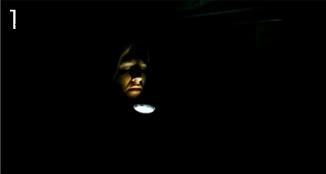
1) This first frame on the right is from the British thriller film "Creep" which is set in the London Underground where a woman gets trapped and cannot get out. This particular frame is shown near the end of the trailer and is part of it's climax. I like this shot because it is the typical thing to do to scare someone as it is unnatural lighting. It is an effective frame because it concentrates on the woman's face and it reflects the horror genre very well.
The frame from my movie is very similar to this as a torch is being pointed up to create a horror effect. We chose to use this frame because we thought it gave a sense of being trapped or not knowing what to do. In 'Creep' the woman is sitting in a corner with the torch pointing up and in our frame the character is laying on the floor with the torch. This shot is very iconic of the horror genre because of the low key lighting and unfamiliar shadows.


PhotobucketPhotobucket


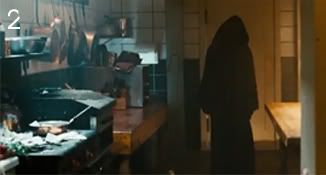
2) This next frame is from a horror/thriller film called "Sorority Row". This film is about a group of girls who play a death prank which goes horribly wrong. The 'monster' in the film wears a long black robe with a big hood like in our film trailer. This particular frame is a long shot of the 'monster' which is standing in the right of the frame. It connotes the horror genre by the dark and mysterious character. This is a typical horror shot because it is a confined space with a long shot. This is almost like a point of view shot which are seen a lot in horror movies.

Our frame is kind of similar to the Sorority Row frame because it is like a point of view shot which is typical to the horror genre. We chose to do this frame because we thought that it would be a very powerful shot. We wanted the audience to sense a feel of being followed or haunted by the Monk. The Sorority Row frame makes the audience feel like they are being chased instead of haunted.


PhotobucketPhotobucket


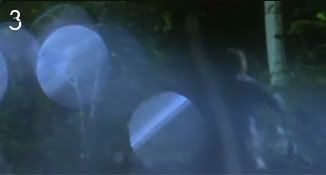
3) The third frame is a running frame from another British thriller film called 'Eden Lake'. Eden Lake is a film we watched in class to understand different types of horror movie and class of people. This is a horror movie which is about a couple who are being intimidated by young teenagers who have grown up in an unstable family. The main protagonist is the girlfriend who is forced to fight for her own life. This particular shot is shown her running away to find help. This is an effective shot because it shows a full perspective of what the protagonist is running from. This is typical of horror movies because it shows that they are lost and not sure where to go.

We also used a similar shot but it was used as a point of view / handheld shot where two people were running and one was holding the camera however the one in Eden Lake was a fixed camera angle and position. The handheld shot signifies the horror genre because it puts the audience in the perspective of the person. This creates a sense of mystery and suspense for the audience. The setting within the Eden Lake frame is shot within an enclosed forest whereas our frame is shot at an open wide graveyard. We thought a graveyard was appropriate because it fit well with our theme of a Monk.


PhotobucketPhotobucket


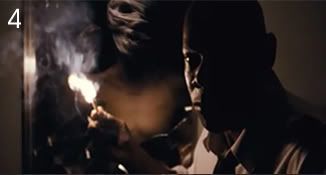
4) This shot is quite difficult to show in a frame because in the trailer for the horror movie 'Devil', this frame only appears for a split second making it the climax of the trailer. Showing frames for a short amount of time surprises the audience. This also sticks in the audience' mind so they will want to see the movie. The particular shot is powerful because the 'monster' is shown by a small flame. The guy who has the lighter is also unaware of the 'monsters' whereabouts.

We also used a similar shot to this where the 'monster' is shown for a very short amount of time which has also been done in a handheld shot. We wanted to create the effect where a character fell over with a camera and by accident caught the monk on camera. This kind of shot is used in the same way to surprise the audience and remember the trailer they saw. Both of these shots show binary oppositions with good/evil. The good people are being haunted or stalked by the evil within the same frame.


PhotobucketPhotobucket


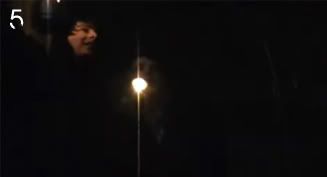
5) This frame is from a horror film trailer which I cannot remember the name but the main protagonist is a woman who is trying to save her friend. This particular frame is used to create a sense of the character being lost and using a torch for self-reassurance. When a torch is used in a horror film, it can be a tool to distract the audience from any 'dangers' within the film and it could also reassure the audience however in horror films, anything could happen at any time. Settings are dark when torches are used and dark settings are very commonly used in horror films. The dark settings also connote the horror genre.

We also decided to use this type of shot because we wanted to create a sense of being lost. The frame is very dark which creates an effect of being trapped or being lost too. The camera angle within this frame is also slightly canted. This creates an effect of unfamiliar and strange surroundings which is also very common within horror movies.

The horror genre also uses very expressive camera work by creating an atmosphere, suspense and tension just by using the camera. By hiding certain parts of a frame can create a real expression in the movie. The camera work in a horror movie is as important as the actors or even the set.

PhotobucketPhotobucket


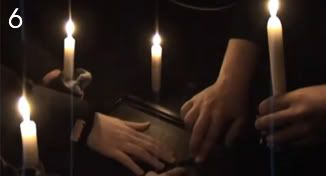
6) This last frame is a frame which is from a film called 'Ouiga' where a group of girls use a Ouiga board and get haunted by evil spirits. This particular frame from the film shows a group of girls looking towards the camera after doing the ouiga board. This shot shows that they have heard or seen something at the corner of their eye and looked in a particular direction. This shows that they are worried and scared. This shot is also hiding the 'danger' which gives the audience a sense of mystery and "what's going on?"

We also used a similar frame but a close up of the ouiga board. Within our trailer, the soundtrack hints at something happening. We do not show the surroundings as it gives the audience a hint as to what is happening. We wanted to keep the 'danger' as the mystery to the audience. The candles also create a sense of an old and creepy effect whereas the one from 'Ouiga' does not have candles and uses artificial lighting.

PhotobucketPhotobucket